During the past week, I have been doing some research on libraries and what is in store for them, following the rise of the ebook. I have always enjoyed to read a normal book, and I am not to keen on the idea that ebooks are going to take over the reading industry.
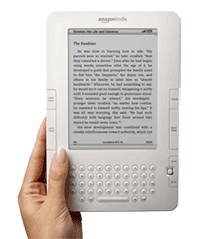
I watched a video on BBC (noticing that St. Paul's School Library was also a feature!) about how this multinational industry, earning millions of money, is at a decline. It is beginning to follow the footsteps of music, and films. Companies such as Amazon have launched their own electronic reader, for example, the Amazon Kindle, and these allow books to be bought electronically - hence the name, ebooks (electronic books). Almost 5% of books bought last year were downloaded electronically, and it is rising. Although 5% does not seem much, when you know that millions of books are purchased each year, it shows you that a vast amount of the population is beginning to do this.
This is not good for libraries, and normal book publishers. They are losing business, and some people are campaigning against this. However, some libraries are benefiting from this, as they themselves are offering "ebook lending"! They are allowing people to visit their libraries and research a book. The advantage of the ebook, is that it does not go out of stock, while you may have to wait in order to borrow a physical book. Through curiosity, I went to visit my local library, and I found out that they are also commencing in this trend. I tried these electronic readers out for myself, however, I did not think that they were as good as the traditional book. I began to lose focus quite easily, and I started to explore what kind of things they could do. I have to admit, however, they are fun to use!!!
The British Library, located four floors beneath the ground, is home to millions of different books, and it is visited by thousands of people each year. They have launched a team that will try to scan around 15 million books, and put them on the Internet, available to download with Amazon, and other companies. This will take a huge amount of time, but as the industry of ebooks is becoming more and more advanced, it will be worth it.

In the USA, Amazon has also announced the 'Kindle Library Lending'. This will allow Kindle customers in the US to be able to borrow around 11 thousand kindle books from libraries. Once the customer has checked out their book, they will be able to access it on their device or app, and their bookmarks will be preserved. I think that this is a great idea, and will not only earn Amazon tons of money, but it will also help all the libraries.
Harvard is also on a mission to build a fully digitalized library. They allowed Google to scan books on the public domain, and then Google advanced to scan copyrighted books. Wellington College is also planning to sell around 80% of all their books, and replace them with ebooks and electronic reading devices.
From my research, I have discovered the huge advance in the ebook industry, and I fear that it may cause a problem for some libraries who are unwilling to allow ebooks to be purchased or borrowed from their libraries. I think it will come to the stage that libraries will no longer be needed, and the ebooks will rule the reading population.

 Every evening, after my father comes home from work, he brings the London Evening Standard. I read this, and I learn new things. If I find something really interesting, I may blog about it, or I may write it down on my phone.